Lima, Peru, March 11 (Special Correspondent NA) — The Peruvian capital is going through one of the most critical moments in its recent logistical history.
What began as a targeted restriction has turned into a partial paralysis of urban transport, evidencing an energy crisis that, according to sector guilds, is not circumstantial or recent, but the result of a sustained deterioration dating back to last year.
From the early hours of this morning, this reporter could observe how the main avenues of Lima have become improvised parking lots. "To top it off, they've now announced that starting tomorrow we'll be without drinking water for two days, so we're literally screwed," an Uber driver told the Argentine News Agency, who had to wait in line for almost five hours last night to fill his tank and be able to work today.
Despite official voices linking the problems to specific incidents in the jungle gas pipelines, the director of the Association of Gas Stations of Peru, Carlos Puente, was emphatic today in various local media to deny this version.
The conflict in the Middle East, which has decimated Iran's strategic leadership and partially blocked the Strait of Hormuz, has pushed crude oil prices to critical levels. However, the most severe impact on the Peruvian consumer comes from the increase in refining costs, which has exceeded annual forecasts, reaching margins that double what was expected for this year.
Carlos Puente maintains that the fundamental solution lies not only in repairing infrastructure but in a real opening of the market that allows greater participation of importers and refineries to stabilize prices through free competition.
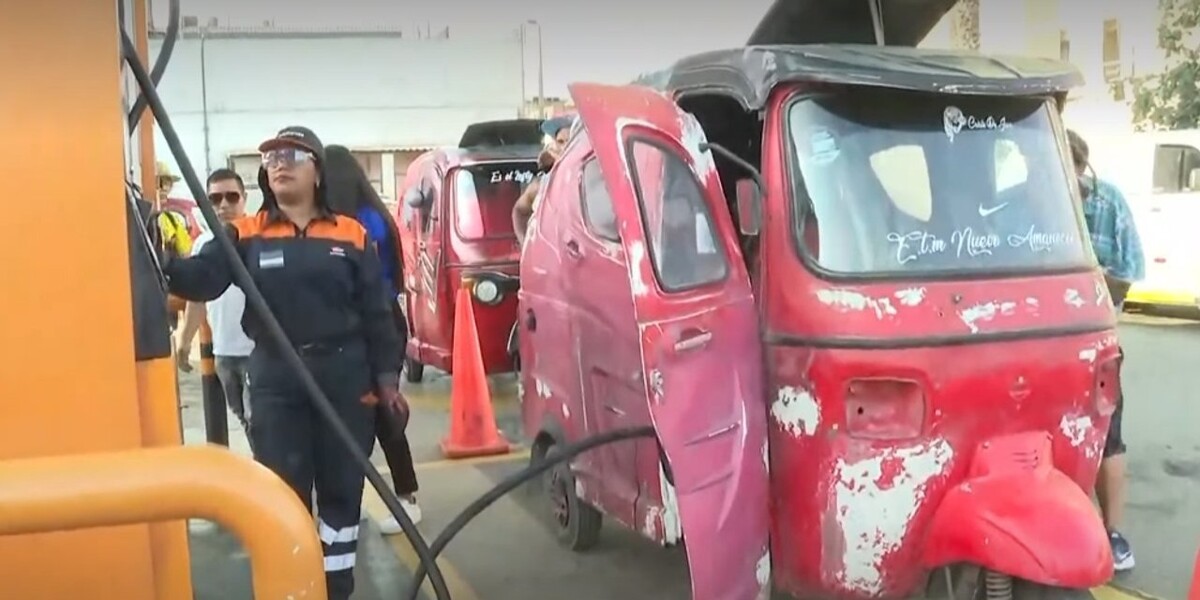
Meanwhile, gas stations operate under a rationing system that barely covers a fraction of the daily demand of the capital. The persistence of long lines at service stations is today the most authentic image of an energy crisis that threatens to deepen inflation and slow the country's economic recovery in the first quarter of 2026.
Meanwhile, Peru is experiencing a new political crisis after the dismissal of José Jeri, who in turn had replaced Dina Boluarte last October. Thus, Peruvians suffer from endless political crises that renew every year or two, when one president is ousted and a new one emerges.
"We have had nine rulers in ten years, and each one turns out to be worse than his predecessor," reflects the Uber driver to this reporter.
Currently, the presidency is in the hands of 83-year-old José María Balcazar, elected by Congress, but the current head of state has 15 ongoing criminal complaints. These range from illicit appropriation to influence peddling and more. In two months, he has a summons to an oral trial, and if he does not attend, he could be declared a fugitive.
In April, Peru will hold presidential elections, and in July, the president elected by Peruvians democratically will take office.
In districts such as San Juan de Lurigancho, Villa El Salvador, and Comas, the service stations —popularly known here as "grifos"— register queues that exceed two kilometers in length. Drivers of public transport, taxi drivers, and private delivery drivers slept in their vehicles in the hope that tank trucks would arrive to refill their tanks.
This shortage led to immediate social problems: the arbitrary increase in fares on informal routes, the reduction of the formal bus transport fleet, and altercations between desperate users over the supply.
Citizen frustration grows in the face of uncertainty not knowing which stations have stock, while "No fuel" signs multiply on price boards.
"This can no longer be tolerated, it's not a matter of one day, or two, it's a matter of a long time and nothing has been done to solve it. That is to say, Balcazar will govern for 5 months, Jerí lasted only 4," he says.
In recent statements, the union representative warned that the shortage was detected since December 2025, gradually worsening during the first two months of 2026. Puente pointed out that the current crisis is multidimensional. On the one hand, the distribution of Vehicle Natural Gas (VNG) is severely restricted, with Cálidda prioritizing only buses and heavy-duty trucks. On the other hand, the interruption in the pipeline operated by Transportadora de Gas del Perú (TGP) left most of the station network without Liquefied Petroleum Gas (LPG), forcing thousands of users to migrate to high-octane gasoline, triggering a demand that refineries cannot satisfy under the current limited quota system.
The international factor and the effect on the pocket
The local landscape is exacerbated by global market volatility.