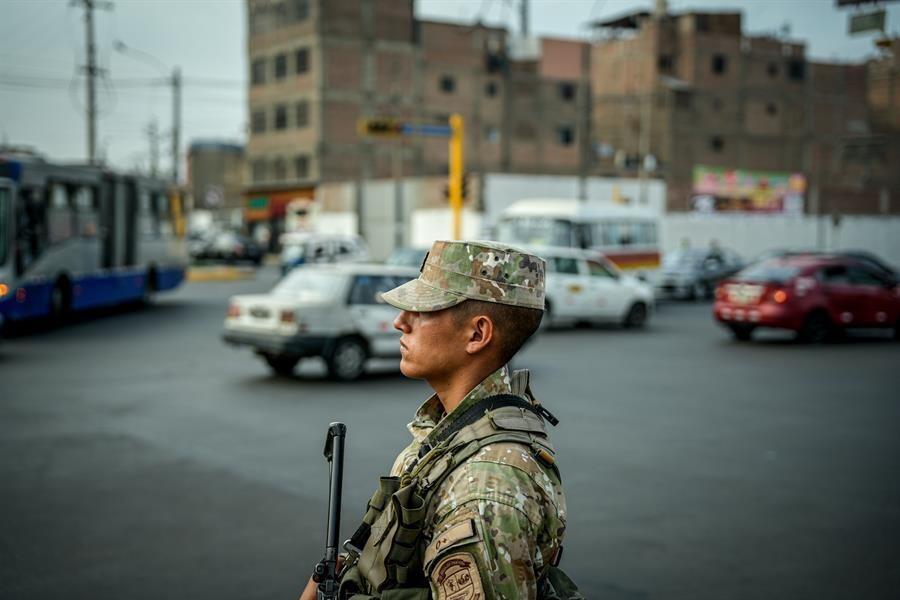
In Peru, the wave of violence and crime has increased, tripling homicides in just three years. The recent murder of a popular cumbia singer in Lima has raised concerns among the population, leading the government to declare a state of emergency in the capital and the province of Callao, a conurbation where a large number of Peruvians reside.
The number of homicides has been rising, with 368 recorded in the first two months of 2025, compared to 111 in the same period in 2018. Despite this increase, Peru is still far from the figures of neighboring countries like Ecuador and Colombia. According to political scientist Eduardo Dargent, while Peru does not reach the violence levels of Central America or Colombia at the regional level, a concerning growth in violence is observed.
Extortion has been on the rise in cities like Trujillo, associated with criminal gangs linked to illegal mining. In Lima, this crime has become widespread and has turned more violent. Criminal organizations demand money in exchange for protection, affecting various sectors in a country where informality is common. The violence with which extortion is exercised, intimidation, and the use of hitmen are symptoms of an uncontrollable situation.
Despite being one of the largest producers of cocaine, Peru does not face a drug cartel war like other countries in the region. Here, there are smaller gangs associated with various crimes such as illegal logging, human trafficking, land trafficking, and mafias linked to construction and illegal mining in different regions of the country. Along with extortion, kidnappings have also increased, a crime that seemed to have been overcome in the 1990s.
Experts agree that authorities have been ineffective in confronting crime. It is noted that the state has limited judicial and police investigative work, which has strengthened criminal organizations. Corruption, ties between police agents and criminal gangs, lack of training, and other structural problems complicate the fight against crime.
Measures such as declaring a state of emergency are considered ineffective, with governmental efforts that could be seen as "fireworks." The proposal to apply the death penalty, reduce the age of criminal responsibility for adolescents, and other populist measures have generated controversy, highlighting the lack of real effectiveness in the fight against violence and crime in the country. The political capacity and efficiency of the authorities are called into question in the face of a scenario of rising violence in Peru.