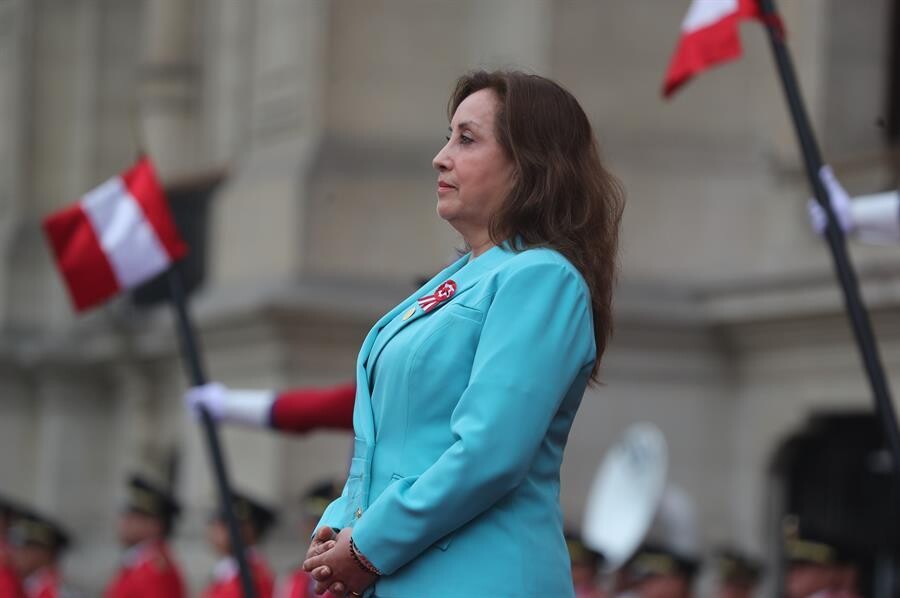
The president of Peru, Dina Boluarte, declared on Monday her serious consideration of proposing the death penalty for hitmen and extortionists, amid a wave of criminal violence affecting her country. During the inauguration of the school year, Boluarte assured that she will not allow more deaths of Peruvians who work honestly, emphasizing the need to protect families from those who attempt to stain them with the blood of their loved ones.
In response to the recent assassination of a cumbia singer in Lima, the president expressed her stance, although without directly mentioning the incident. This tragic event has shaken Peru, intensifying pressure on the Minister of the Interior, Juan José Santiváñez, and leading several political parties to call for his resignation or dismissal.
In the face of criticism of her management and the high public disapproval she receives according to polls, Boluarte defended her integrity, challenging those who try to defame her. She highlighted that, although they may invent stories, they will never be able to accuse her of corruption, and she assured that she will continue to work with honesty, without being intimidated.
The president denied that her stance is a populist measure, while the Minister of Education, Morgan Quero, indicated that the proposal for the death penalty will be explained in detail in the coming days. Boluarte had previously suggested opening a debate on this punishment for the rape of minors, an initiative that the Government is evaluating after gathering opinions from society and various institutions.
The death penalty has not been applied in Peru since the entry into force of the Constitution of 1979, which only contemplates it for cases of treason against the homeland. The country ratified the American Convention on Human Rights in 1978, restricting this type of punishment.