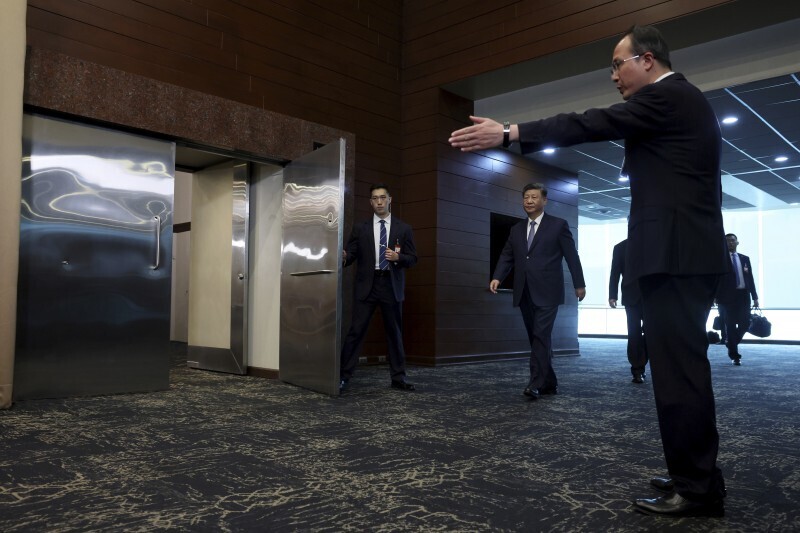
Last week, the president of Peru inaugurated the port of Chancay as a model for agreements and business in the region, marking the beginning of a series of events in the city. Xi Jinping, president of China, arrived in Chancay with an extensive delegation and a busy bilateral agenda, in contrast to the current situation of Joe Biden, who has lost influence in these forums after the elections.
Xi Jinping offers Latin American governments Chinese investments in infrastructure and mobility, including projects such as the port of Chancay and the Bogotá metro. These offers are tempting but pose challenges for the leaders of the region with Donald Trump's return to the White House.
Mexican president, Sheinbaum, has stated that Mexico is open to doing business with all countries, trying not to upset the Republicans. For his part, the Argentine leader, Milei, hopes to receive financial assistance from Trump to address urgent economic issues, despite his initially tough stance against China.
At this G20 summit in Rio de Janeiro, the presence of Chinese president Xi Jinping stands out. The outgoing U.S. president, Trump, has intensified his anti-China rhetoric and is surrounding himself with politicians with similar stances. This aggressiveness is reflected in the absence of China in Claudia Sheinbaum's bilateral meetings in Rio de Janeiro.
Meanwhile, there are expectations in Mexico City and Buenos Aires regarding the possible influence of Elon Musk, who has business in China, to reduce Trump's hostility towards the Asian country. Musk has participated in Biden's interviews with candidates for key government positions and seems to play an important role in the transition.