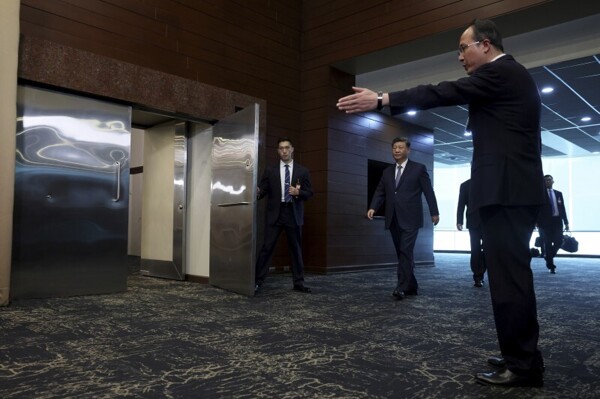
Former Argentine Minister José Luis Manzano is in the eye of the storm for associating with Xi Jinping's regime at the inauguration of the mega port of Chancay, Peru. This port, with an investment of 1.3 billion dollars, aims to become the epicenter of trade between China and Latin America. Is Manzano playing a risky game or has he found a new niche in the world of global trade?
The opening of the Chancay port promises to be a geopolitical milestone by becoming the new gateway for Latin American products to Asia, with projections of receiving a million containers in its first year. Meanwhile, competition with Chile intensifies, with Chancay gaining ground and Chileans lamenting the loss of their consolidated position in the region.
Manzano's association with China does not go unnoticed, especially by the CIA, which watches with dismay as a man with a controversial past becomes a key player in a project with the potential to change the trade dynamics of the region. Having moved among the shadows of Argentine politics, Manzano now finds himself at the center of international geopolitics, a radical change of scenery that has surprised many.
Manzano's relationship with U.S. intelligence and his strategic partnership with China raise dilemmas and questions about his role in this new scenario. China's growing influence in Latin America raises concerns about potential influences and risks for the region, especially in Peru. How did Manzano manage to insert himself into such an important project? Through Transition Metals, part of his holding Integra Capital, he acquired a Peruvian mining company that controlled Inversiones Portuarias Chancay (IPCH), thereby opening the doors to the port business.
Manzano's past, marked by corruption in Argentine politics, contrasts sharply with his new role as a port magnate and strategic partner of China in an ambitious project. Uncertainty and nervousness grow in Washington over this new alliance and its potential implications. The story seems straight out of a spy novel, with transactions and financial movements keeping observers and analysts on edge.